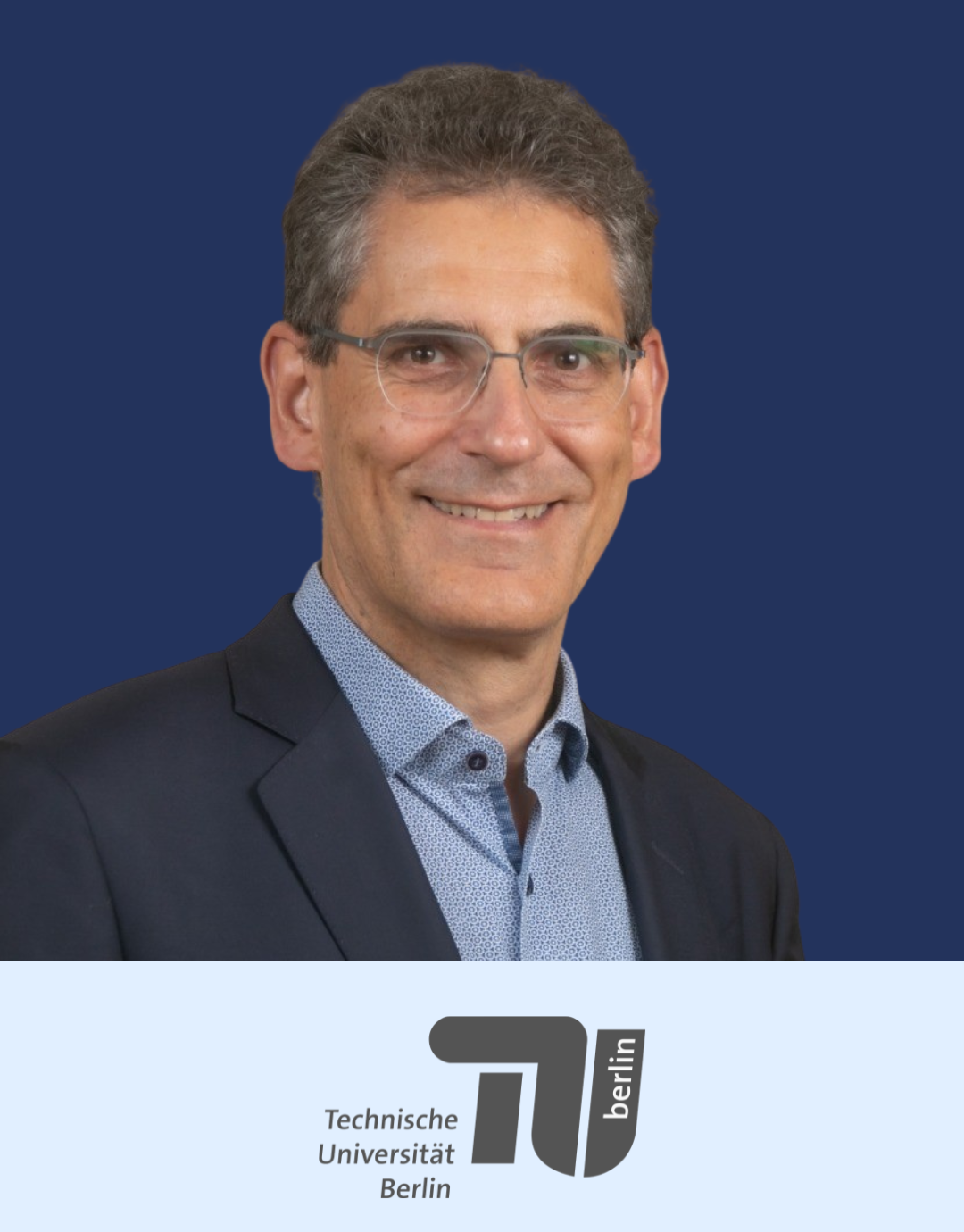
Peter Neubauer
TU Berlin
Bioprocess development is characterized by complex interactions between biological systems, process conditions, and engineering constraints, making the generation of actionable knowledge both laborious and time-consuming. While laboratory automation has substantially increased experimental throughput and reproducibility, the next transformative step lies in the development of autonomous laboratories that can design, execute, analyse, and optimise experiments with minimal human intervention.
This presentation describes the evolution of the KIWI-biolab at TU Berlin from an automated experimentation platform into a self-driving biolab that integrates robotics, advanced process analytics, mechanistic modelling, artificial intelligence, and digital workflow management within a unified computational framework. Central to this development is the implementation of a workflow management system that enables reproducible, interoperable, and FAIR-compliant experimentation while seamlessly connecting laboratory operations with computational decision-making (Mione et al., 2024).
A key technological enabler is the integration of high-throughput process analytics. In particular, automated Raman spectroscopy has been incorporated into the parallel cultivation platform, providing non-invasive, high-frequency measurements of critical process variables and metabolic states. Combined with automated sampling and data processing pipelines, this analytical infrastructure generates information-rich datasets that support real-time monitoring, state estimation, and adaptive process control (Lange et al., 2025).
The self-driving capabilities of the KIWI-biolab are realised through the combination of mechanistic and data-driven models with advanced control and learning strategies. Model predictive control and moving horizon estimation have been successfully deployed to autonomously optimise feeding strategies in parallel Escherichia coli cultivations, enabling adaptive operation under dynamically changing conditions (Kim et al., 2023). Recent advances in automated Bayesian regression further enable the autonomous identification and refinement of bioprocess models from parallel cultivation data, substantially accelerating model development and uncertainty quantification (Luna et al., 2025). These approaches build upon robust mechanistic descriptions of microbial growth and production processes, including recent developments in the modelling of E. coli fed-batch cultivations with complex media (Schröder-Kleeberg et al., 2025).
Together, these developments demonstrate how self-driving biolabs transform experimental facilities from automated execution platforms into cognitive systems capable of autonomous learning and decision-making. By integrating advanced analytics, predictive modelling, and closed-loop optimisation, the KIWI-biolab establishes a foundation for accelerated bioprocess development, improved reproducibility, and ultimately autonomous scientific discovery in biotechnology.
Mione et al. 2024. A Workflow Management System for Reproducible and Interoperable High-Throughput Self-Driving Experiments. Comp Chem Engin 187, 108720, doi.org/10.1016/j.compchemeng.2024.108720.
Kim et al. 2023. Model predictive control and moving horizon estimation for adaptive optimal bolus feeding in high-throughput cultivation of E. coli. Comp Chem Engin, 172, 108158, doi.org/10.1016/j.compchemeng.2023.108158
Schröder-Kleeberg F et al. 2025. Modelling of E. coli Batch and Fed-Batch Processes in Semi-Defined Yeast Extract Media. Bioengin 12, 1081, doi.org/10.3390/bioengineering12101081
Luna et al. 2025. Automated regression of bioreactor models using a Bayesian approach for parallel cultivations in robotic platforms. Biochem Engin J 219, 109729, doi.org/10.1016/j.bej.2025.109729.
Lange et al. 2025. A Setup for Automatic Raman Measurements in High-Throughput Experimentation. Biotechnol Bioengin 122, 2751–2769. doi.org/10.1002/bit.70006