
Bridging Kinetic Modelling for Bioprocess to Genome-Scale Knowledge and Omics Support
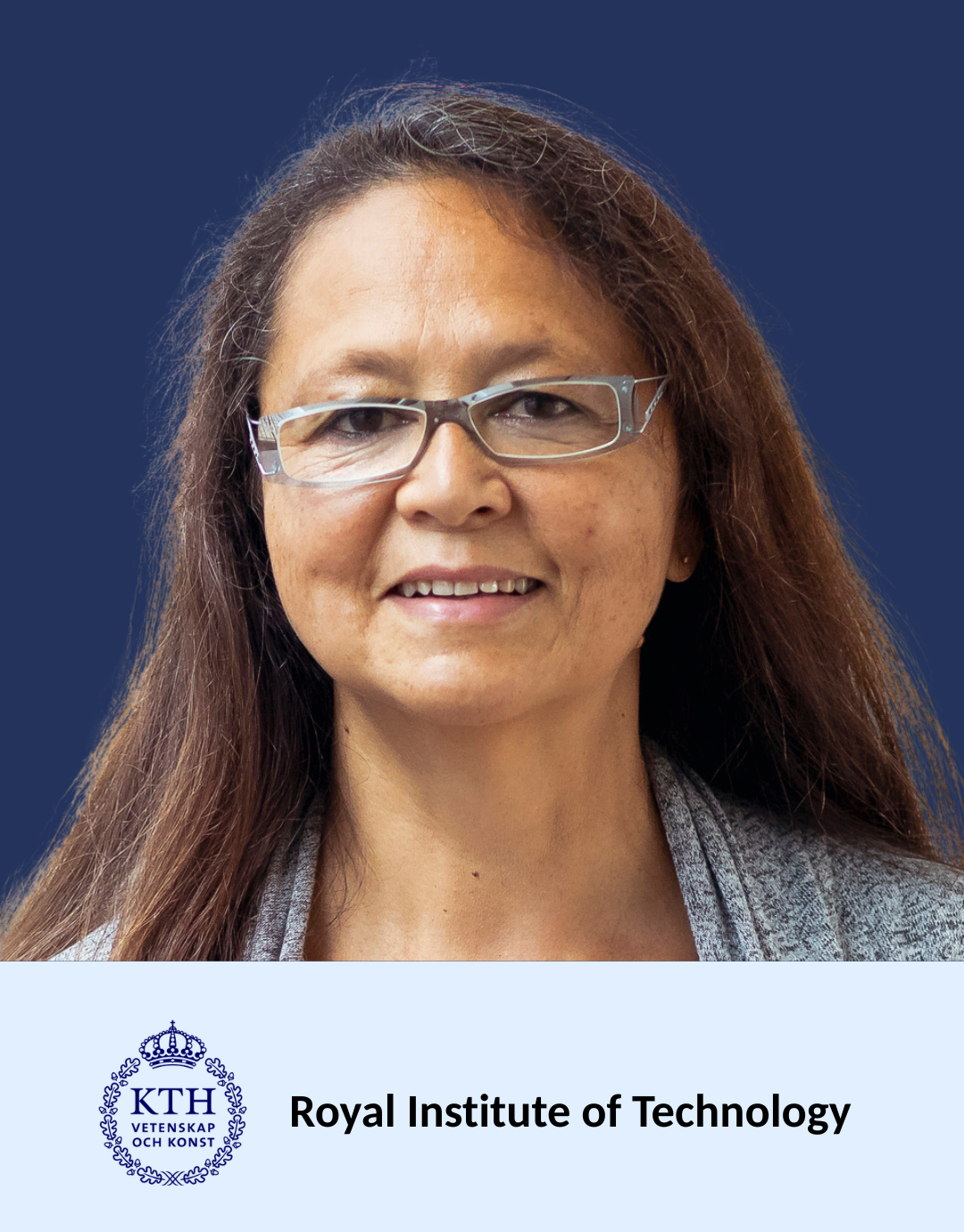
Veronique Chotteau
Royal Institute of Technology
Abstract
Modelling of culture processes can effectively support in silico process development and optimization, reducing experimental efforts, as well as empowering process control. Kinetic models involve a mechanistic description based on the stoichiometric biochemistry and require the expression of underlying kinetics involving the culture components.
We have developed a novel modeling approach that integrates the selection of the pathways, i.e. macroscopic reactions determined by Elementary Flux Mode column generation (CG) algorithm, complemented by Monod-type kinetics. Both the macroscopic reactions and kinetic expressions are systematically identified based on the experimental data information. The approach is applicable to genome-scale networks of reactions and can be further guided by transcriptomics data. The systematic identification of Monod-type kinetics is achieved using a machinelearning strategy.
Using this framework, we designed a medium optimization strategy aimed at maximizing monoclonal antibody (mAb) production in CHO cell perfusion culture. The strategy was experimentally validated and resulted in higher mAb production than obtained with a traditional Design of Experiment approach.
In addition, our CG-based method for identifying processrelevant macroscopic reactions was applied to interpret untargeted metabolomics data from a CHO fedbatch process producing a difficulttoexpress enzyme. This analysis revealed key components associated with productivity improvement.
These case studies will be presented and discussed in the talk.

Véronique Chotteau
Professor, Director of AdBIOPRO
Professor Véronique Chotteau, Director of AdBIOPRO, Competence Centre for Advanced Bioproduction by Continuous Processing. Chotteau is the Leader of the Cell Technology group, Dept. Industrial Biotechnology, School of Engineering Sciences in Chemistry, Biotechnology, and Health, KTH (Royal Institute of Technology), Stockholm, Sweden. She has a background of MSc Electrical Engineering, MSc Biotechnology, PhD Automatic Control/Modelling/Biotechnology (University of Louvain, Belgium), and has built her career in the biopharmaceutical area.
Chotteau has more than 30 years of experience in mammalian cell culture including ≥ 10 years in biopharmaceutical industry (at Pharmacia Upjohn/Biovitrum, Stockholm, nowadays Swedish Orphan Biovitrum). She joined KTH in 2008, when she was offered to lead the animal cell cultivation activities. Her group is focusing on cell-based processes for biologics production, high cell density perfusion of CHO and HEK293 cells, mathematical modelling, process analytical technology and biomanufacturing for gene therapy and cell therapy. Her group was the first to publish cell densities higher than 200 millions cells/mL in CHO cell perfusion process.
